
Dog Waste Stations for HOAs in Twin Falls
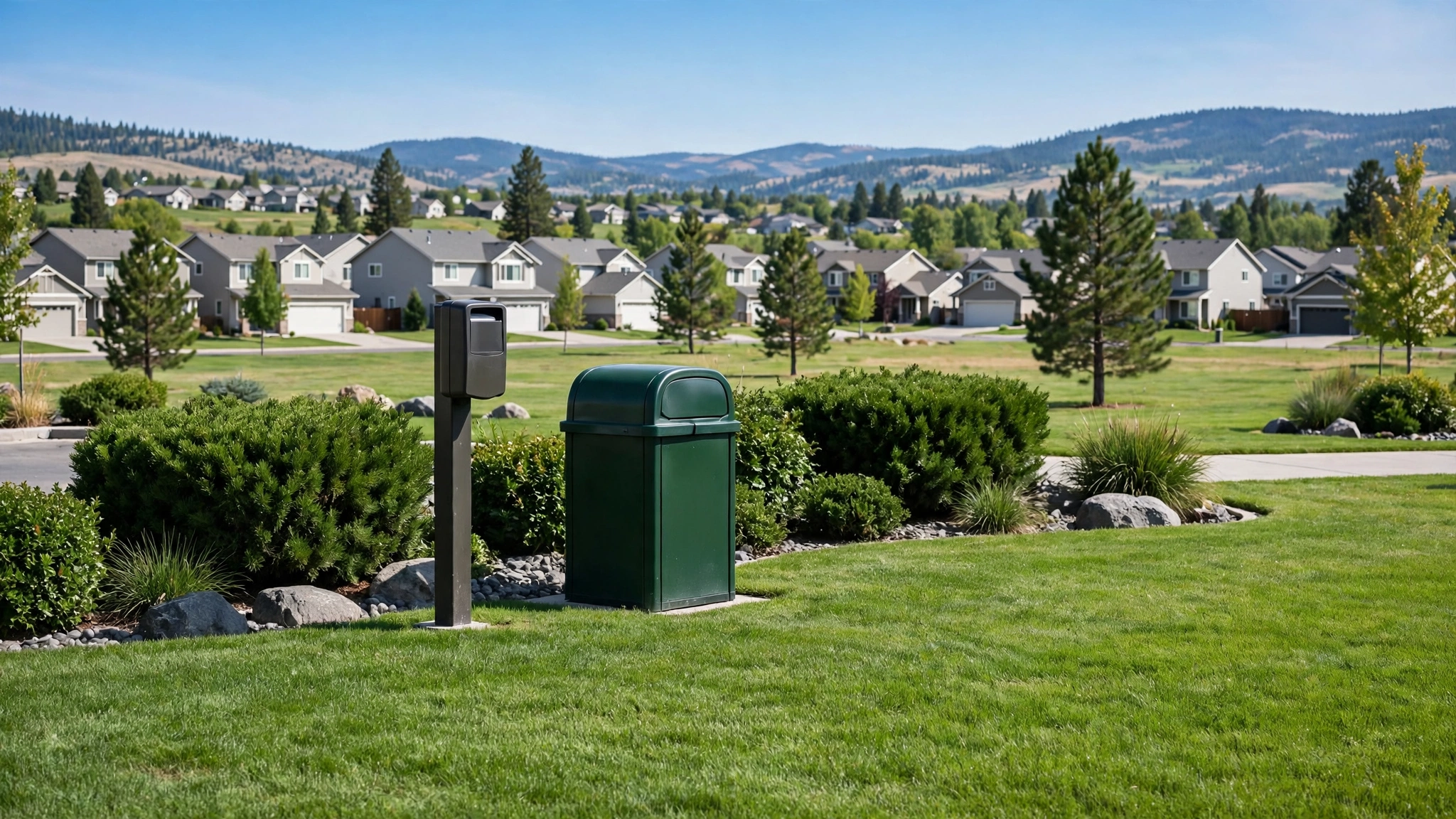
Dog waste stations are bag-dispenser posts paired with a covered bin, placed along the paths and common areas where residents actually walk their dogs. For a Twin Falls HOA, the winning formula is simple: one station per high-traffic corridor, serviced weekly so bags never run out and bins never overflow. At Twin Falls Pet Waste Removal, we install and maintain those stations for Magic Valley communities — so board members stop getting complaint emails about the common areas.
Where to Place Stations (and Where Not To)
Walk your subdivision the way your residents do. Stations belong at natural pause points: trail entrances, the corners where two walking routes meet, near playgrounds (not right beside the swings — a little buffer helps), and at the edges of shared greenbelts. In Twin Falls neighborhoods from Kimberly to Buhl, one station per high-traffic corridor is the sweet spot; a typical subdivision needs two to four, not twenty.
Skip the spots that look good on a map but fail in real life. Don't tuck a station behind a fence or at the far end of a dead-end path — if residents can't see it, they won't use it. Avoid low spots where irrigation runoff pools, because standing water soaks the bags and turns the bin into a soggy mess. And keep stations a respectful distance from patio fences and bedroom windows; nobody wants a shared bin as their view.
What Good Servicing Actually Looks Like
A station that isn't serviced is just a fancy post. Here's the weekly rhythm that keeps things working:
- Empty the bin and replace the liner before it's full — an overflowing bin is worse than no bin at all.
- Restock the bag dispenser so it's never empty; most complaints start the moment a resident pulls at an empty slot.
- Wipe down the post and lid — quick, simple, keeps the station looking like the board cares.
- Check the hardware (mounting bolts, hinge, lid latch) so wind and weather don't knock it out of commission.
Most HOAs do well with weekly servicing, stepping up to twice weekly in spring when the thaw reveals what winter hid. This is where a vendor earns its keep: a route-based commercial pet waste service handles bag restocks, bin emptying, and hardware checks on one predictable schedule, and the board gets a receipt instead of a volunteer roster. Check our service areas to see if your community is on our route.
Idaho Seasons Change the Playbook
Magic Valley weather has opinions, and your stations have to deal with them.
Winter: Bags freeze in the dispenser and snow buries the lower half of the bin. Mount dispensers high enough to stay above the snowpack, and make sure your servicer clears snow from around the station — if residents can't reach it, they won't use it.
Spring thaw: This is peak season. Everything that accumulated over winter surfaces at once, right when residents are walking again. Plan a spring reset cleanup of common areas alongside your regular station servicing; your pricing conversation should account for this seasonal surge.
Summer: Heat plus a full bin equals odor complaints. Shaded spots keep things cooler, and this is the season where skipping a service week shows up fastest.
Fall: Leaves clog lids and jam dispensers. A quick monthly hardware check keeps the stations running through the leaf drop.
How to Pitch It to Your Board
Board members think in budgets and complaints. Frame stations as complaint reduction, not a luxury. The pitch: two to four stations plus weekly servicing costs the HOA a predictable monthly line item, and it replaces the volunteer bag-refill system that always falls apart by August.
Bring three things to the meeting: a map with proposed station locations, a quote with a fixed monthly price, and a resident survey if you have one (even a casual poll of your neighborhood group works — most dog owners will say yes). Emphasize that a local, insured vendor handles everything: installation, weekly service, and bag supply. No resident labor, no finger-pointing when the bags run out.
And if the board hesitates, start small. Two stations on the busiest walking corridor is a pilot program, not a commitment — and the complaint emails usually stop long before the pilot ends.
Frequently Asked Questions
How often should HOA dog waste stations be serviced?
Weekly is the baseline for most Magic Valley subdivisions: bin emptied, bags restocked, hardware checked. Step up to twice weekly in spring or if your community has a lot of dogs, and scale back never below weekly — empty-looking stations in July fill faster than you think.
Who refills the bags in an HOA dog waste station?
Whoever the board assigns — which is exactly why volunteer systems fail. The reliable answer is a service vendor that owns the whole cycle: bag supply, restocking, bin emptying, and hardware checks on a set route. That way the board gets one bill instead of a chore list.
What happens if a station gets damaged or vandalized?
Sturdy commercial stations are built for it, but lids and dispensers do wear out. A good servicing plan includes hardware checks so small problems (a loose bolt, a cracked dispenser) get caught before the station becomes unusable. Ask your vendor whether hardware inspection is included in the service — it should be.
Want the stations without the hassle? At Twin Falls Pet Waste Removal, we install and service dog waste stations for HOAs and subdivisions across the Magic Valley — weekly bag restocks, bin emptying, and common-area sweeps, all on one simple plan. Book online
📞 +1 609-435-8967 · 🌐 twinfallspetwasteremoval.com · ✉️ info@twinfallspetwasteremoval.com