
Weekly vs Biweekly Scooping in Twin Falls: Best Plans for 1 Dog vs 3 Dogs
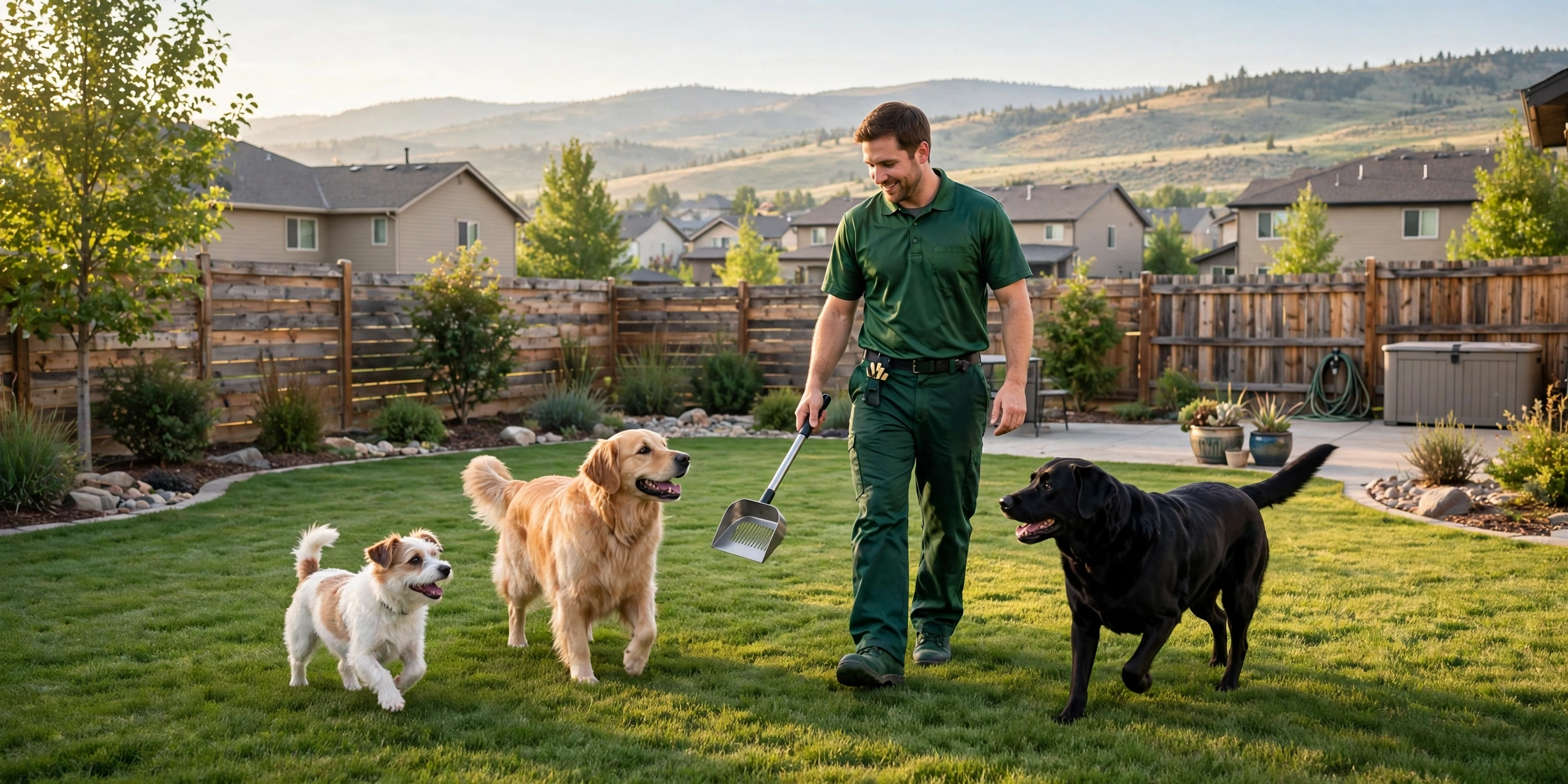
If you have one dog, biweekly scooping can absolutely work. If you have three dogs, you almost certainly want weekly. That is the short answer for Magic Valley dog owners deciding between weekly and biweekly service, and here at Twin Falls Pet Waste Removal it is the question we hear most often from households on the fence.
The honest version is a little more nuanced. Dog count is the biggest factor, but yard size, how your family actually uses the yard, and the season all shift the answer. This guide walks you through how waste volume scales with each dog, when biweekly is genuinely enough, and what each plan costs — so you can pick the right plan for your household in Twin Falls, Kimberly, Jerome, Buhl, Filer, or Hansen.
How Waste Volume Actually Scales With Each Dog
One of the most common surprises for new multi-dog households is how quickly the yard fills up. Waste volume does not just feel bigger with each dog — it scales in a way that matters for your schedule.
One dog. A single dog produces a manageable amount that accumulates slowly. In a medium or large yard, two weeks between cleanups usually looks fine, especially if the dog roams and does not concentrate everything in one corner. One dog gives you the most flexibility of any household.
Two dogs. This is where most families notice the tipping point. Waste roughly doubles, but dogs also tend to use the same favorite spots — the corner near the back door, along the fence line — so the visible buildup in those zones happens faster than "twice as much" suggests. Two-dog homes in the Magic Valley are where weekly service starts to make real sense.
Three or more dogs. Three dogs usually push a yard past what biweekly can handle. The yard starts to look untidy well before the next visit, and on a hot July afternoon in Twin Falls, the smell from two weeks of buildup carries across the fence. With three or more dogs, weekly service is the comfortable baseline — and some large-breed multi-dog households even ask us about twice-weekly.
Size matters too. A Great Dane and a Chihuahua are not interchangeable. When you tell us about your household, mention both the number of dogs and their size so we can recommend the right cadence.
When Biweekly Scooping Is Genuinely Enough
We are not going to upsell you on weekly if biweekly will do. Here is the honest checklist: biweekly scooping works well when all or most of these are true.
- One dog (or one small dog plus an occasional visitor), not a multi-dog household.
- A decent-sized yard where waste is spread out rather than concentrated in one small run.
- Light to moderate yard use. If the kids are not playing soccer out back every evening and you are not grilling for the neighborhood every weekend, the yard does not need a showroom-level baseline.
- You do a quick spot-check between visits. Biweekly works best when the owner is willing to pick up anything obvious in between — think of it as a partnership.
One caveat for Magic Valley summers: our hot, dry weather means odor travels. A light breeze off the canyon can carry smells further than you would expect. If your yard is small, your dogs are large, or your patio sits right next to the dogs' favorite spot, summer may be the season you switch from biweekly to weekly — and switch back in the fall.
Why Three-Dog Households Usually Need Weekly
With three dogs, the math stops being forgiving. Even in a generous yard, two weeks of accumulation from three dogs is a lot to live with — and in a smaller Jerome or Buhl lot, it can take over the usable space entirely.
There are practical reasons beyond appearance. A yard that is heavily used gets tracked into the house more, the kids' play areas overlap with the dogs' zones, and warm-weather odor becomes a real quality-of-life issue. Winter brings its own version: snow buries everything, and the spring melt reveals exactly what accumulated over the cold months. Weekly service through winter means that spring cleanup is quick and painless instead of a major project.
Multi-dog homes also tend to have the dogs using the same runs and corners, which wears the grass down in those lanes. Keeping the surface consistently clean is one part of keeping those lanes usable and healthy-looking. See our services page for what a weekly visit covers.
The Cost Side: What Weekly vs Biweekly Actually Runs
Let us talk numbers honestly. Weekly service means a visit every week — roughly four cleanups a month. Biweekly means every other week — roughly two cleanups a month.
Weekly pet waste removal in the Twin Falls area starts from $70 per month. Because biweekly involves half as many visits, it runs less per month than weekly. The exact number depends on your dog count, yard size, and how much buildup there is at the first visit.
Two things to know about the cost comparison:
- Weekly is the better value per visit. More frequent visits keep each visit shorter and the yard consistently clean, which is why weekly is the most popular plan we offer.
- Your first visit may include an initial cleanup if the yard has not been scooped in a while. That one-time deeper clean gets everything to a fresh baseline, and then your regular plan maintains it.
For exact pricing on your household, check our pricing page or get an instant quote online — no phone call required.
Your Quick Decision Checklist
Still unsure? Answer these three questions:
1. How many dogs, and how big are they?
One small-to-medium dog in a decent yard → biweekly is a real option. Two dogs → lean weekly. Three or more → weekly, no question.
2. How do you use your yard?
Kids playing, outdoor dining, frequent guests → weekly keeps the yard guest-ready. Low-key yard that mostly the dogs use → biweekly can work.
3. What season are we in?
Hot Magic Valley summers amplify odor and fly activity; that is the season to be on the safer side. If you are booking in spring or summer with multiple dogs, start weekly — you can always adjust later.
Our team can also help you think it through during booking. And if your household changes — a new puppy joins the family, say — switching plans is easy. Check our service areas to confirm we cover your city, then pick the plan that fits.
Frequently Asked Questions
Can I switch from biweekly to weekly later?
Yes. Many customers start biweekly with one dog and move to weekly when a second dog arrives or summer hits. Just let us know and we will adjust your schedule — there is no penalty for changing plans.
Does dog size matter as much as dog count?
It matters a lot. A single large breed can produce as much as two small dogs, and the yard space they wear down is bigger too. When choosing a plan, tell us both the number of dogs and their size so we recommend the right cadence.
What is the cost difference between weekly and biweekly?
Weekly plans start from $70 per month in our service area. Biweekly costs less per month since it is half the visits, with the exact amount depending on your dogs and yard size. See our pricing page for details or request a quote.
A Clean Yard Starts With the Right Plan
There is no one-size-fits-all answer, but there is a right answer for your household: match the frequency to your dog count, your yard, and how you live in it. At Twin Falls Pet Waste Removal, we would rather put you on the plan that actually fits — and adjust it with you as life changes — than guess once and hope.
Book your first visit today and tell us about your dogs. We will help you choose between weekly and biweekly, get the yard to a fresh baseline, and keep it that way.
📞 +1 609-435-8967 · 🌐 twinfallspetwasteremoval.com · ✉️ info@twinfallspetwasteremoval.com